
Click here to register for Virtual Congress.
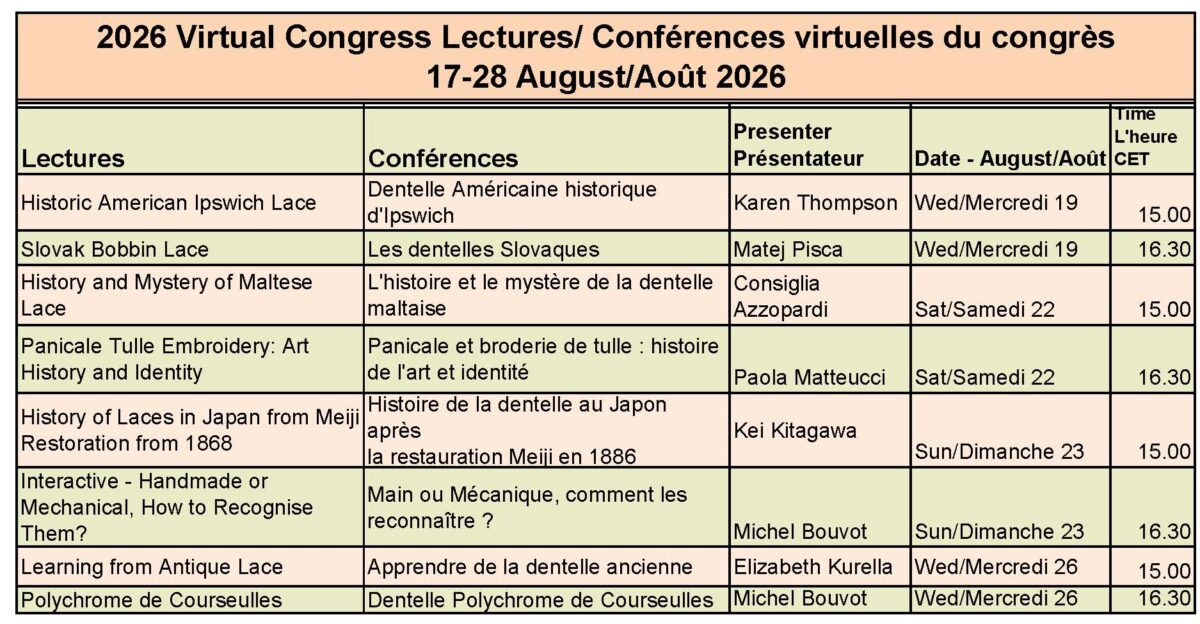
Quick Facts: All Lectures will be held between 15:00 – 18:00 Central European Time. Each lecture is approximately 1½ hours. The Zoom link will be sent to all participants before the lectures begin on 19 August 2026. A Q&A will take place after the lecture. Unable to watch the live lecture? The lectures are being recorded and will be available for all Virtual Congress registrants on the Virtual Congress Participant secure page after the last lecture. YouTube has a translation capability – with subtitles. Click on the presenter’s name (in the lecture description) to learn more about the lecture. ALL LECTURE TIMES LISTED ARE CENTRAL EUROPEAN TIME.
Fees: All participants must be registered to attend Virtual Congress 2026. Virtual registration includes 8 lectures including an Interactive Quiz – Handmade or Machine Made Lace?
Virtual registration for members is €26 (early bird) and €42 after 31 March 2026.
Virtual registration for non-members is €42 (early bird) and €67 after 31 March 2026.
Registration for a virtual course (12 hours) is €130 plus the appropriate registration fees.
Questions : Please use the website contact form to send a question.
Historic American Ipswich Lace
Wednesday, 19 August 15.00 CET
Karen Thompson, USA
Discover the fascinating history behind one of America’s most unique industries! Join us for an engaging lecture exploring the legacy of Ipswich, Massachusetts – home to the nation’s only large-scale handmade lace industry in the 1700s. Among Alexander Hamilton’s papers in the Library of Congress are rare samples of black silk lace edgings, a testament to this thriving craft. Learn about the 600 skilled lacemakers of Ipswich who, in just one year, produced an astonishing 28 miles (45 km) of lace. We’ll dive into the intricate lace patterns, the tools used, and the intriguing questions surrounding their origins. Don’t miss this opportunity to uncover a hidden chapter of American history!
Slovak Bobbin Lace
Wednesday, 19 August 16.30 CET
Matej Pisca, Slovakia
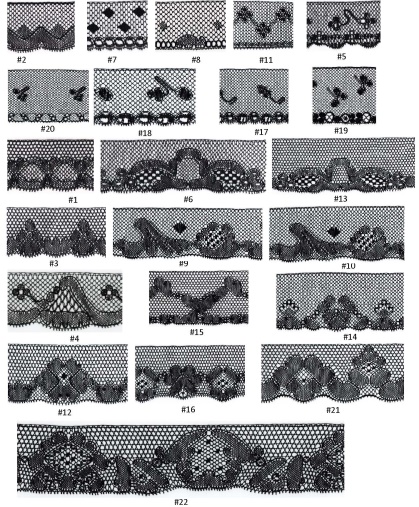
Slovak bobbin lace is a traditional handmade craft, created by weaving fine threads using wooden bobbins. Originating in the 17th century, it became especially popular in regions like Špania Dolina, Myjava, and Novohrad, Krakovany, Liptov, Hont, Prešov, etc. There are 18 types of bobbin lace in Slovakia.
More than just decoration, this lace carries cultural meaning – adorning festive clothing and household textiles. Each motif tells a story, often symbolizing love, home, or protection.
Today, bobbin lace remains a living tradition in Slovakia, celebrated for its beauty, precision, and deep connection to folk heritage.
The History and Mystery of Maltese Lace
Saturday, 22 August 15.00 CET
Dr. Consiglia Azzopardi, Malta
Bobbin lacemaking arrived in the Maltese Islands around the 16th century. However, very little was documented in national or church archives. The reason is quite straightforward: lacemaking was not considered worthy of mention, as it was simply regarded as a way for women to pass the time within the confines of their homes. Having grown up in a remote village on the northernmost tip of the island of Gozo, facing the southern coast of Sicily, the lecturer learned the tricks of the trade both at home and from lacemakers sitting at their doorsteps – women who, despite considering themselves ignorant due to their illiteracy, possessed remarkable skill and knowledge. Their stories were shaped by hardship – emerging from struggles for survival during challenging times. To truly understand their lacework, one must look not to official records, but to the church laces they crafted with devotion and love – hidden from the authorities who would impose taxes, and even from the Bishop himself, who condemned lacework on Sundays.
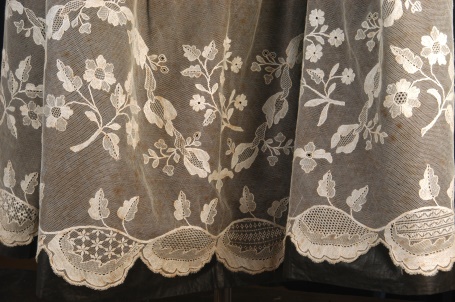
Panicale and Tulle Embroidery: Art History and Identity
Saturday, 22 August 16.30 CET
Paola Matteucci, Italy
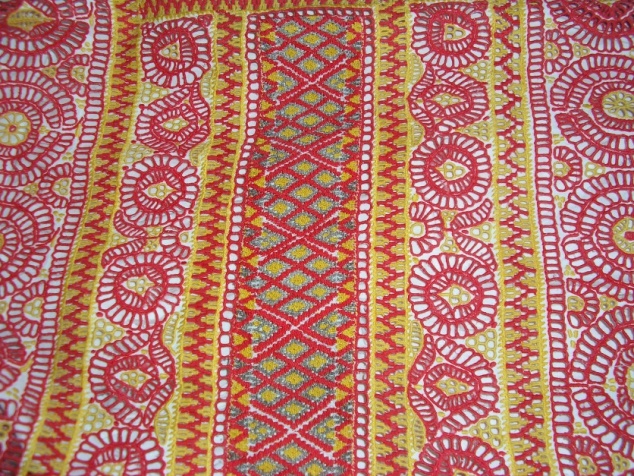
The lecture begins with an introduction to the lace tradition, and in particular to embroidery on netting from Panicale, in the province of Perugia. Paola discusses her journey of learning the art of net embroidery and the tradition and characteristics of Italian net embroidery. Paola presents the characteristics of her embroidery, research and study of ancient stitches and their use on modern patterns.
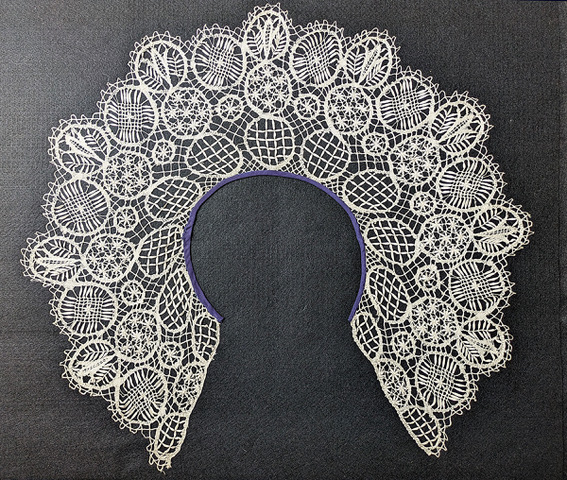
Collar, Irodori Laces Museum
Lace History in Japan after the Meiji Restoration in 1886
Sunday, 23 August 15.00 CET
Kei Kitagawa, Japan
In 1886, after the Meiji Restoration, the Lace Making Training School was established by the new government for young women of the Samurai class who had lost their employment. Lace works were highly praised and received many awards at both the World and National Expositions at the time. During the wars and earthquakes, needle lace was side employment that enabled the women who had lost their families to become financially independent. After World War II, the machine industry developed and machine-made lace began to be mass-produced. Lace evolved into a craft for enjoyment.
After the Meiji Restoration, bobbin lace was only used as an accessory for the Western-style clothing of women at the Rokumeikan, which was built for diplomatic purposes, and for the Western-style clothing of the Imperial Court. It did not become popular among the general public because of the high cost of importing materials and tools.
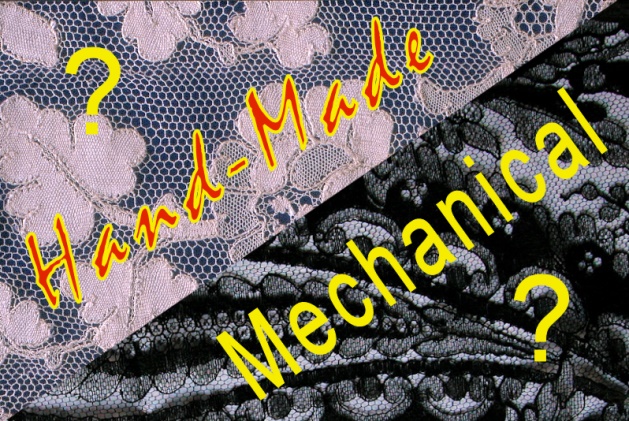
This is an interactive session.
Handmade or Mechanical, How to Recognise Them?
Sunday, 23 August 16.30 CET
Michel Bouvot, France
You’ve all heard: “This is real lace. It’s from my grandmother… There’s a handmade label…”. But handmade or mechanical, how can you be sure? Claudette and Michel Bouvot invite you, after a few generalities, to recognise the particularities of handmade and machine-made laces: (Blondes – Chantilly – Courseulles…) Each participant, equipped with an index card, will be able to test his or her skills during a presentation of 10 slides (10 laces) then we will see together, with close-ups, the details that differentiate handmade laces from machine-made laces. This is an interactive session.
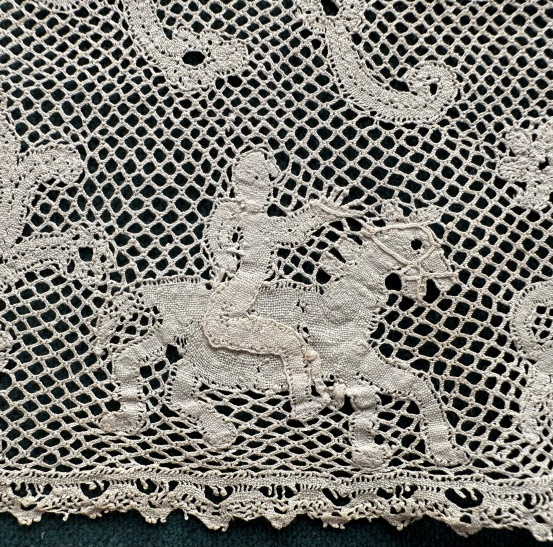
Learning from Antique Lace
Wednesday, 26 August 15.00 CET
Elizabeth Kurella, USA
Crazy rich royals from the sixteenth through the eighteenth centuries financed the beginnings of the lacemaking industry – so anything was possible. Through the centuries, lace was revered and considered too good to throw away, so marvelous examples are still available to us today. In this lecture, we will learn how to tap into this wellspring and study lace design, techniques and fashions through online auctions of old lace and remarkable private and museum collections around the world.
Polychrome Lace from Courseulles
Wednesday, 26 August 16.30 CET
Michel Bouvot, France
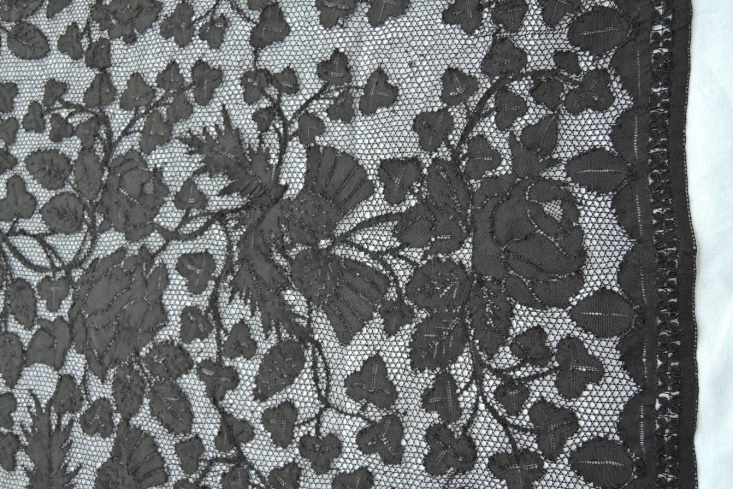
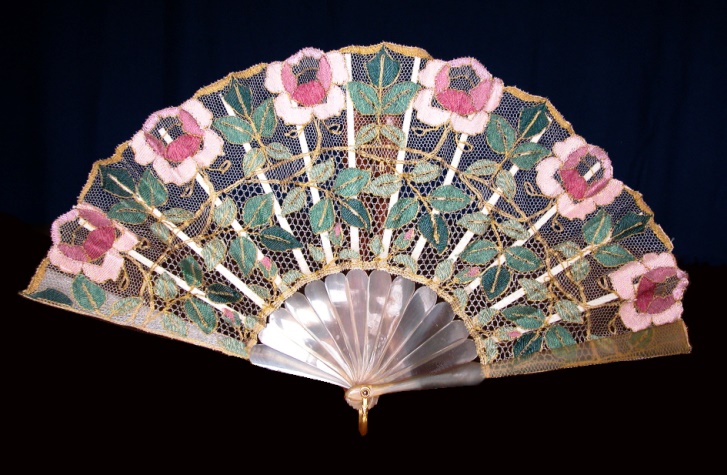
In the 19th century, handmade lace faced stiff competition from machine-made lace, and was selling less and less. In 1896, Félix Aubert designed a lace that could not be copied by machines. Together with Violard de Courseulles, he patented a new lace called ‘Chantilly polychrome’.
Today, Claudette Bouvot has rediscovered this technique and is reviving this extraordinary lace by giving courses in France and abroad. I’d also like to introduce you to her friend, Chantal Hervieux, who made a Courseulles polychrome shawl (6,000 hours work), and has begun a second one.
Together, we have devoted several books to coloured lace, the most recent in 2022, ‘200 Ans de dentelle à Courseulles’.

You must be logged in to post a comment.