
All Virtual Lectures will be held between 15:00 – 18:00 Central European Time on Zoom. The lectures will be recorded and available on YouTube for all registered Virtual Congress participants. YouTube has a translation capability – with subtitles.
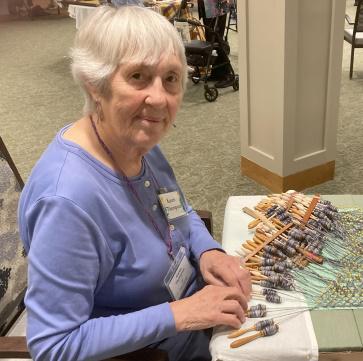
Historic American Ipswich Lace
Karen Thompson, USA
While growing up in Denmark, Karen learned many types of handcrafts. In 1974 her mother introduced her to bobbin lace including how to draft patterns. Since then she has studied bobbin lace in the USA and abroad. She has taught at IOLI Conventions and for local guilds. She has been teaching beginner and Ipswich zoom lace classes for The Lace Museum for several years. She is active in several lace guilds in the US and internationally. In 2017 she published a book on The Lace Samples from Ipswich Massachusetts, 1789-1790. A 12-Hour Introduction to Bobbin Lace booklet was added in 2020 in collaboration with Kim Davis and Linda Kay Benning.

Slovak Bobbin Lace
Matej Pisca, Slovakia
Matej has been dedicated to traditional lace in Slovakia for over 12 years. His home village is Krakovany, where he and his parents run a private museum. Thanks to his work at the museum, he discovered the traditional lace from this region and began to study and develop it further.
In 2022, thanks to his mother and Matej, the lace from Krakovany was inscribed on the Intangible Cultural Heritage list of Slovakia.
Matej actively presents, documents, and teaches this traditional lace both in Slovakia and abroad. This lace was used in traditional folk costumes and is made using five bobbins.
Facebook – Matej Pisca lacemaker
The History and Mystery of Maltese Lace
Dr. Consiglia Azzopardi, Malta
Dr. Consiglia Azzopardi grew up in a farming family where traditional crafts such as spinning, weaving, knitting, and lace-making were part of daily life. From an early age she developed a strong interest in handwork, excelling at needlework in school and becoming especially fascinated by lace design and bobbin work.
After training as a teacher, she eventually specialised in lace-making at the Girls’ Trade School. Her teaching and research helped revive the craft at a time when it was in decline. She authored several books, including Gozo Lace – An Introduction and Maltese Lace: History and Mystery, Four Centuries of Bizzilla, Beyond her publications, she played a central role in establishing lace education programmes, the Malta Lace Guild, and the Gozo lace cooperative, ensuring the continuation of this cultural tradition for future generations.
Today, Consiglia dedicates her time to restoring antique lace pieces, particularly from churches, and continues to share her expertise through part-time short courses on Maltese lace at the University of Malta.
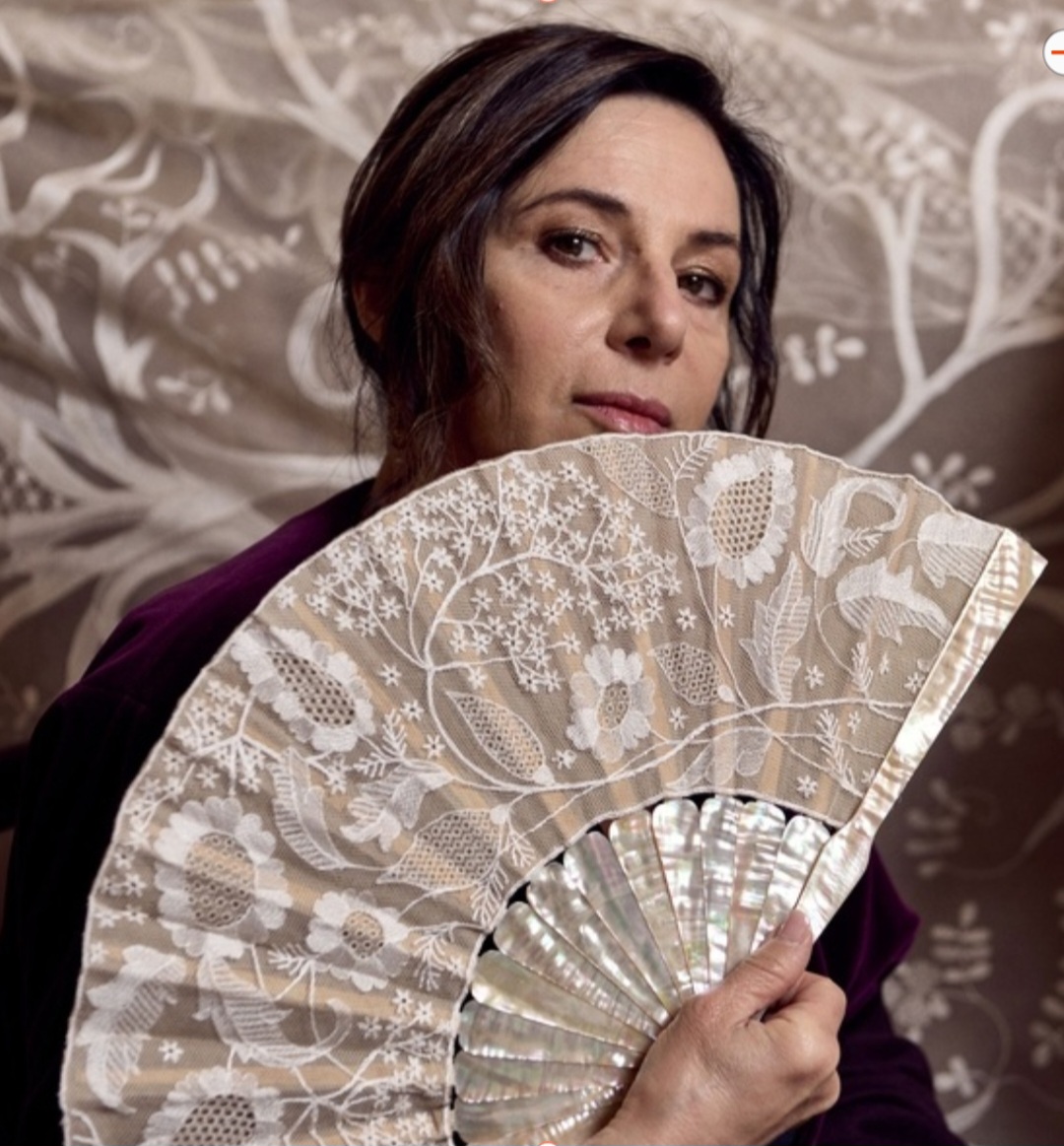
Panicale and Tulle Embroidery: Art History and Identity
Paola Matteucci, Italy
Paola’s interest in embroidery led her to learn Ars Panicalensis, embroidery on tulle in the 19th-century Italian tradition from the master embroiderers of her town. Over the years, Paola has refined and reworked the technique, perfecting and inventing stitches and designs and developing her own teaching method.
Paola collaborated extensively with the Municipality of Panicale in setting up and managing the local Tulle Museum. She collaborated on the book “Ars Panicalensis – the Anita Belleschi Grifoni Tulle Museum in Panicale” and has written three manuals dedicated to teaching tulle embroidery. Since 2004, she has been teaching tulle embroidery technique. In September 2024, she was awarded the prestigious title of Master of Arts and Crafts by the Cologni Foundation.
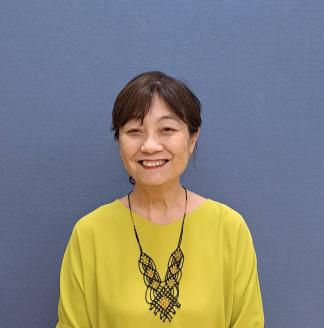
Lace History in Japan after the Meiji Restoration in 1886
Kei Kitagawa, Japan
For 20 years, Kei has been an instructor in various types of lace-making and a researcher of modern Japanese lace history and handicraft history. She has authored numerous books and columns, and her academic papers have also been published in the academic journal of the Japan Home Economics Association. Her passion knows no bounds, and her remarkable collection gathered for research can be seen at the Museum of Lace, Knitting, and Handicraft History. She opened this captivating museum which is located in Yugawara Town, Kanagawa Prefecture, a hot spring resort just one hour from Tokyo.
Handmade or Mechanical, How to Recognise Them?
Polychrome Lace from Courseulles
Claudette & Michel Bouvot, France
Claudette learned lace-making in Bayeux and started a collection in the early 1980s. Michel, a primary school principal, quickly became interested in the history of this forgotten art. Together, they wrote their first book and created the association “Dentelles et Blondes – Caen et Courseulles” to promote lace-making and preserve this heritage. Every year, Claudette and Michel organize meetings, exhibitions, trips, and conferences related to lace. In 2007, they presented a project to organize the 2012 OIDFA congress in Caen, which was a huge success. Claudette rediscovered the polychrome technique of Courseulles and the Honfleur stitch and has been teaching since the 1990s. Together they have written some fifteen books on lace. Their association aims to protect antique lace and has a large collection, 25 pieces of which have already been donated to the Musée de Normandie in Caen and one to the Musée d’Alençon.

Learning from Antique Lace
Elizabeth Kurella, USA
Elizabeth Kurella has been studying the history, identification, and evaluation of lace throughout Europe and the USA for over forty years. Elizabeth has evaluated and identified lace collections for several museums as well as private collections. She has studied bobbin and needle lacemaking. She is the author of Guide to Lace and Linens, The Secrets of Real Lace, Anybody Can Mend Lace and Linens, as well as assorted other books and articles on antique lace. Elizabeth frequently teaches online classes for The Lace Museum at www.thelacemuseum.org.

You must be logged in to post a comment.